How Does a Chimney Work?
Quick Summary:
A chimney is more than just a brick structure above your roof—it’s a critical safety system that vents smoke, gases, and heat from fireplaces, wood stoves, furnaces, and boilers. Understanding how a chimney works helps homeowners identify problems early, maintain efficiency, and protect their homes from fire hazards, carbon monoxide, and water damage. This guide explains the science of chimney draft, the key parts of a chimney, common problems, and essential maintenance tips.
Key Takeaways:
- Chimney function: Creates a draft to safely vent smoke and combustion gases out of your home.
- Essential parts: Bricks/masonry, flue, damper, liner, chimney crown, chimney cap, smoke chamber, flashing, hearth, and firebox.
- Safety risks: Blockages, creosote buildup, water damage, draft problems, and structural deterioration.
- Maintenance tips: Annual inspections, regular chimney sweeping, waterproofing, timely repairs, and protective components like caps and crowns.
- Professional service benefits: Full system evaluation, flue inspections, repointing or masonry repair, liner installation, and long-term chimney protection.
How Does a Chimney Work? A Complete Guide to the Parts of a Chimney
Most people think of a chimney as just the brick structure that rises above the roofline. But in reality, a chimney is a carefully designed system that performs one of the most important safety functions in your home: it removes harmful gases, smoke, and heat from fireplaces, wood stoves, furnaces, and boilers. Without a properly functioning chimney, your home could be at risk of fire hazards, carbon monoxide poisoning, or costly water damage.
So, how does a chimney work? At its core, a chimney creates a draft that pulls smoke, carbon monoxide, and other combustion byproducts up and out of your home. That draft is influenced by heat, pressure differences, and the condition of the chimney itself. To fully understand this, it’s important to look at the different parts of a chimney and how each one contributes to safety and efficiency.
At Best Chimney Services, we’ve been inspecting, repairing, and maintaining chimneys for over three decades, and we’ve seen firsthand how understanding chimney anatomy helps homeowners stay proactive about maintenance. In this article, we’ll walk through how a chimney works, break down the key parts of chimney systems, and explain what you should know to keep yours in top shape.
Why It’s Important to Understand How a Chimney Works
Knowing how a chimney works isn’t just for masons or chimney sweeps; it’s valuable knowledge for every homeowner. Here’s why:
- Safety: A malfunctioning chimney can allow dangerous gases like carbon monoxide to enter your living space. Read our blog for 4 fireplace safety tips you can’t afford to miss.
- Efficiency: The better you understand the chimney’s role, the more effectively you can maintain it, helping your heating system perform at its best.
- Prevention of costly repairs: Early detection of mortar cracks, damaged flashing, or liner problems can prevent expensive rebuilds.
- Peace of mind: When you know the basic parts of a chimney, you can communicate more effectively with professionals and feel confident about decisions.
The Chimney Safety Institute of America (CSIA) recommends having your chimney, fireplace, and vents inspected at least once per year. Annual inspections and regular sweeping are the best ways to ensure your chimney continues to do its job safely.

The Science Behind Chimneys: Draft and Ventilation
Before breaking down the parts, let’s talk about the simple physics of how a chimney works. Chimneys operate on the principle of draft, which is created by the difference in temperature between hot gases inside the chimney and cooler air outside.
- Hot air rises: When you burn wood, gas, coal, or oil, the combustion process produces hot gases. These gases are lighter than the cooler, denser air outside, so they naturally rise.
- Draft effect: As the hot air rises through the chimney flue, it creates a draft that pulls smoke, gases, and particulates up and out of the home.
- Airflow balance: For draft to work properly, your home must also allow enough air into the firebox (called makeup air). If the house is too tightly sealed, it can affect chimney performance.
If any part of the chimney is blocked, cracked, or poorly designed, the draft won’t function correctly, leading to backdrafts, smoke in the home, or dangerous carbon monoxide leaks.
Anatomy of a Chimney: The Essential Parts of Chimney Systems
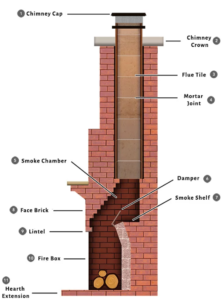
A chimney is more than just bricks and mortar. It’s a coordinated system made up of multiple parts, each serving a vital function and requiring specific safety standards. Let’s walk through the parts of a chimney and their roles in keeping your home safe and efficient.
1. The Bricks and Masonry
The outer shell of the chimney is made of bricks and mortar. This structure gives the chimney its height and stability while protecting the flue from weather and impact.
- Why it matters: Strong masonry keeps water out and prevents structural collapse. Damaged bricks or deteriorating mortar can let in moisture, leading to mold, mildew, and even chimney failure.
- Maintenance tip: Watch for cracks, spalling (flaking brick surfaces), or mortar erosion. Regular tuckpointing or repointing helps extend the life of masonry.
2. Chimney Cap
A chimney cap is like a protective hat placed at the very top of the chimney.
- Purpose: deters rain, snow, leaves, and nesting animals.
- Safety: Many caps include a spark guard mesh that prevents embers from escaping onto the roof.
- Maintenance tip: Inspect regularly to ensure the mesh isn’t clogged with creosote or debris.
3. Chimney Crown
The chimney crown is the sloped, concrete surface that covers the top of the chimney stack. It is often confused with the cap, but the crown protects the entire top of the structure, while the cap specifically covers the flue openings.
- Why it matters: Prevents water from seeping down between bricks and mortar.
- Common issue: Cracked crowns are one of the most common causes of leaks inside chimneys.
4. Chimney Flue
The flue is the vertical passageway inside the chimney that allows smoke and gases to escape. Most modern chimneys include a flue liner for added safety.
- How it works: Guides combustion gases up and out, while containing the extreme heat generated by fire.
- Maintenance tip: A dirty or blocked flue increases fire risk. Annual sweeping is essential.
5. Chimney Damper
Located just above the firebox, the damper acts as a door that opens and closes to regulate airflow.
- Open: When in use, the damper must be open so smoke can exit.
- Closed: When not in use, a closed damper blocks off the flue from the room. A well sealed damper prevents drafts and keeps heated or cooled air inside your home.
- Maintenance tip: A warped or rusted damper wastes energy and should be replaced.
6. Chimney Liner
Chimney liners are made from materials such as stainless steel, aluminum, or clay tile. They serve two key purposes:
- Safety: Prevents heat transfer that could ignite nearby wood framing.
- Efficiency: Helps combustion gases flow smoothly upward.
If a liner is cracked or damaged, it should be replaced immediately before using the fireplace or heating appliance again.
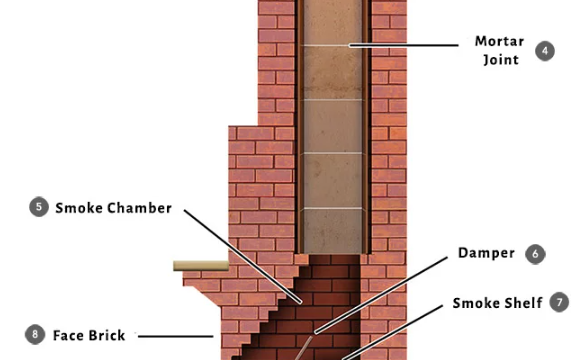
7. Smoke Chamber and Smoke Shelf
Before smoke enters the flue, it passes through the smoke chamber, which narrows upward to guide gases efficiently. Behind it sits the smoke shelf.
- Smoke chamber: Funnels smoke into the flue.
- Smoke shelf: Catches falling debris and helps reduce downdrafts.
Improperly shaped smoke chambers can cause turbulence and smoke buildup, making this area critical during inspections.
8. Chimney Flashing
Flashing is the metal barrier (aluminum, copper, or lead) that seals the gap between the chimney base and the roof.
- Purpose: Prevents water leaks into the attic or living areas.
- Maintenance tip: Rusted, missing, or poorly sealed flashing is a major source of roof leaks.
9. The Fireplace: Hearth Extension and Firebox
While technically part of the fireplace system, the hearth and firebox work in conjunction with the chimney.
- Hearth Extension: The non-combustible floor area in front of the firebox.
- Firebox: The chamber where the fire burns. Built from heat-resistant firebrick.
These areas need to withstand intense heat while channeling smoke upward into the chimney.
Common Problems That Affect How a Chimney Works
Even the best-built chimney can run into problems over time. Here are some common issues homeowners should be aware of:
- Creosote buildup: Highly flammable residue that collects inside flues from wood-burning fires.
- Blockages: Leaves, nests, or debris can obstruct airflow.
- Water damage: Caused by cracked crowns, missing caps, or faulty flashing.
- Draft issues: Poor design, negative air pressure inside the home, or blocked flues can cause backdrafts.
- Structural deterioration: Cracked mortar, spalling bricks, or leaning chimneys.

How to Keep Your Chimney Working Properly
To ensure your chimney continues working safely and efficiently, follow these maintenance tips:
- Annual inspections: Schedule a CSIA-certified chimney sweep to check the entire system.
- Regular cleanings: Chimney sweeping removes creosote and blockages.
- Sealants: Applying a breathable sealant protects masonry from freeze-thaw cycles.
- Timely repairs: Address cracks, leaks, or liner damage as soon as they’re discovered.
- Install protective components: Chimney caps, crowns, and flashing prevent the majority of water-related issues.
Why Professional Chimney Service Is Essential
While homeowners can spot surface-level issues, only a trained chimney technician can fully evaluate the condition of your system. Professional services include:
- Video inspections of the flue
- Smoke chamber parging for smoother draft
- Chimney repointing or rebuilding masonry
- Liner installation and replacement
- Chimney sealant and cap installation
All-Service Chimney Care in Boston, MA
If you’re in the Boston or Greater Boston area and wondering how a chimney works or whether yours is in good condition, Best Chimney Services is here to help. Our experienced team offers comprehensive services including:
- Chimney inspections & cleanings
- Chimney masonry repair & repointing
- Chimney liners & cap installation
- Chimney waterproofing
- Commercial and residential chimney care
Final Thoughts
Understanding how a chimney works and learning about the parts of chimney systems gives you the knowledge to protect your home, improve energy efficiency, and avoid costly repairs. Your chimney is more than just an architectural feature—it’s a vital safety system that deserves regular attention.
If it’s been over a year since your last inspection—or if you’ve noticed cracks, leaks, or performance issues—don’t wait. Call Boston’s Best Chimney today at (781) 893-6611 or contact us here to schedule your inspection. We look forward to keeping your chimney safe, functional, and beautiful for years to come.